A smart lock can go on a fire door only if it has been fire tested or assessed for that make and type of door, fitted within the limits of that evidence, and the door’s certificate and register are updated afterwards. A lock that is “fire rated” on someone else’s door is not automatically compliant on yours.
Fire doors in apartment buildings are essential safety measures. They are inspected six-monthly or yearly under AS 1851 and listed on the building’s Annual Fire Safety Statement. Fitting an unapproved lock, or enlarging the lock cut-out, can turn a compliant door into a defect that must be rectified — usually at the owner’s cost, and sometimes by replacing the whole door.
This guide covers what makes a smart lock compliant, how to check it, how to re-use the existing cut-out, strata approval, paperwork, and a shortlist of locks with current test evidence.
What makes a smart lock “fire rated”
No lock is fire rated on its own. Under AS 1905.1-2015, hardware on a fire door must be the same as the hardware in the door’s fire test, or be covered by a test or assessment from an accredited laboratory showing it does not reduce the door’s fire resistance level (FRL). The evidence is always tied to a door system.
A smart lock is compliant on your door only when all of these line up:
| Check | What the evidence must show |
|---|---|
| Door system | The same door manufacturer and core as yours (e.g. Firecore TVC-Core, E-Core, Pyropanel). Evidence for one door brand does not carry over to another. |
| Fire resistance level | An FRL at least equal to the door’s rating, e.g. -/60/30 or -/120/30. |
| Test standard | The AS 1530.4 edition your door was tested to (2005 or 2014 in recent years). Many hardware lists show separate approvals for each. |
| Door size | The leaf type covered, e.g. Firecore “Mini” and “Maxi” doors carry separate ratings. |
| Exact product | The same model, lock body (mortice or tubular latch), backset (60, 70 or 127 mm), furniture, strike and reinforcing as tested. |
| Cut-out and fixings | The lock cut-out, cable holes and fixings are no larger than those in the evidence. |
| Current report | A test report, assessment or Certificate of Assessment that has not expired. Most are issued with a fixed expiry date. |
Two further rules apply to every fire door, smart or not:
- It must still self-close and latch. The mechanical latch must engage every time the door closes, including when the batteries are flat. An electronic lock that only “locks” without a latching bolt is not acceptable.
- Common area doors must open from the inside without a key, code, card or app, by a single action on the lever. Check the egress provisions of the NCC (Volume One, Part D3) for your building class.
Things that commonly make a smart lock non-compliant: the new lock not being tested and given a fire rating, and the new lock having a different cut out pattern, leaving previous holes in the door.
Confirming a lock is rated for your door
Work from the door to the lock, not the other way round. The door’s tag tells you which evidence you need.
- Read the door tag. It is a metal plate or label on the hinge edge of the leaf. It shows the standard, the FRL, the leaf manufacturer and a unique door number. The frame has its own tag. No tag, or it is painted over or unreadable? The door system cannot be confirmed from the door itself. Stop here and get advice before buying anything.
- Check the building’s records. The fire door register and the Annual Fire Safety Statement (AFSS) list the door’s FRL and location. Note whether it is a sole-occupancy unit (SOU) entry door — an apartment front door.
- Find the evidence for your door brand. Ask the lock supplier for the test report or assessment, and check the door manufacturer’s approved hardware list.
- Read the report, not the brochure. Confirm the door manufacturer and core, the FRL, the exact lock model, lock body and backset, and any conditions.
- Compare the cut-out (next section).
- Keep a copy of the report and the hardware list page with the building’s fire door records.
If any step fails, it is best to look for an alternative.
Re-using the existing lock cut-out
A fire door’s lock cut-out cannot be patched to suit a new lock. The new lock must fit the holes already in the door, and those holes must be no bigger than the ones in its test evidence.
The easiest route is a smart lock that was tested with the lock body already in your door. Many are: the McGrath ML-Windsor was assessed with Dormakaba MS2602 and MS2902 mortice locks and Lockwood 530 tubular latches, and Lockwood SMARTair IMAX with the Lockwood 3772 mortice. Swapping only the outside and inside furniture keeps the cut-out unchanged.
Before ordering, take the existing furniture off and record:
| Measure | Why it matters |
|---|---|
| Lock type: mortice lock or tubular latch | A tubular latch cannot replace a mortice lock pocket, or the reverse, without new cutting. |
| Brand and model of the lock body | Shows whether it is one of the bodies named in the smart lock’s report. |
| Backset (door edge to centre of handle), mm | Must match a backset in the report — commonly 60, 70, 95 or 127 mm. |
| Face plate and pocket size | The new body must sit in the existing pocket with no extra routing. |
| Spindle, cylinder and through-bolt holes | Positions must line up with the new escutcheons; no new holes outside the evidence. |
| Cable or battery-pack holes | Electronics that need a new cable hole through the leaf are a common reason for refusal. |
| Strike plate and frame cut-out | The latch must still engage fully in the existing strike. |
| Lock reinforcing plate, if fitted | Some approvals depend on it, e.g. a reinforcing channel behind a 127 mm backset cylindrical lock. |
Take photos of both faces and the door edge with a tape in shot. If the existing cut-out is oversized or damaged, a new lock will usually not fix it — choose a lock that fits, or replace the door leaf.
Strata approval
Get the owners corporation’s written approval before the lock is bought or fitted. In most NSW strata schemes the apartment entry door is common property, and it is always a fire safety measure the owners corporation is responsible for maintaining and reporting on in the AFSS.
What to check and send:
- The by-laws. Many schemes have a by-law on entry doors, locks or approved hardware. Some require a specific lock so the master key or access system keeps working.
- The strata plan. It shows whether the door is common property or part of the lot. Your strata manager can confirm.
- The approval request. Include the door number from the tag, the lock make and model, the test report and the page of the hardware list that covers your door, photos of the existing cut-out, and the name of the installer.
- Who updates the records. Agree that the installer’s certificate and updated register entry go to the strata manager, so the next inspection and AFSS reflect the change.
In NSW, the Strata Schemes Management Act 2015 sorts owner works into cosmetic work, minor renovations and work that needs a special by-law. Which category a lock change falls into depends on the scheme, so ask the strata manager rather than assume. Approval from strata does not make an unapproved lock compliant — the fire test evidence still decides that.
Before the lock is fitted:
- By-laws checked
- Strata manager confirmed door ownership and approval route
- Approval request sent with report, photos and installer details
- Written approval received
Updating the certificate and fire door register
A lock change is not finished until the paperwork shows it. Without it, the next inspector sees unfamiliar hardware with no evidence and records a defect.
The door tag stays as it is. Never remove, drill, cover or paint over it. A hardware change does not re-tag the door; the tag records how the door was made, and the new paperwork records what changed.
| Record | Who | What it should contain |
|---|---|---|
| Certificate of installation for the lock | The installer | Door number and location, lock make and model, lock body and backset, test report number and revision, the FRL it supports, installation date, installer details, and a statement that it was fitted to the report’s conditions. |
| Fire door register entry | The fire door contractor, on behalf of the owners corporation | The hardware change against that door number, the date, the evidence reference, and before-and-after photos. |
| Evidence file | Strata manager or building manager | A copy of the test report (the revision current on the installation date) and the hardware list page. |
| Annual Fire Safety Statement (AFSS) | The accredited practitioner (fire safety), or APFS | No new form — the APFS relies on the certificate and register when assessing the doors for the next statement. |
Fire doors are inspected every six months under AS 1851-2012; SOU fire doors — the front doors of individual apartments or tenancies — can be extended to once every 12 months. The inspector checks that the door still self-closes and latches, and that the hardware matches the register. Give them the certificate before the next visit.
How Shire Fire Doors can help
Shire Fire Doors can take a smart lock from idea to signed-off paperwork, or help with any single step.
- Identify the door. We read the door and frame tags and check the building’s register to confirm the door system and FRL.
- Check the lock before you buy. Send us the lock you like; we check it against the test reports and hardware lists for your door brand, including expiry dates and conditions such as battery side.
- Assess the existing cut-out. We record the lock body, backset and holes, and tell you which approved locks fit without new cutting.
- Support the strata application. We supply the evidence pack the owners corporation needs: report, hardware list page, photos and installer details.
- Fit the lock to the conditions of its report, and check the door self-closes and latches afterwards. Access control such as mag locks and hold-opens can be fitted too, subject to confirming on site.
- Do the paperwork. You receive a service report with photos, an updated electronic door register entry and a certificate of installation (PDF) for the strata records and the next AFSS.
- Replace the door if the cut-out can’t be saved. Every opening is measured with a Prodim Proliner digital template so the new doorset is made to fit, typically in about two weeks.
Not sure where to start? We can quote from photos of the door, its tag and the existing lock. Call 1300 910 499 or email admin@shirefire.com.au.
Ten approved smart locks with current evidence
These ten electronic locks are approved for at least one door system through a current test report — with the report number and expiry for each. Each approval applies only to the door system, lock body and backset shown — check your door against the full report before ordering.
1. McGrath ML-Windsor Smart Lock
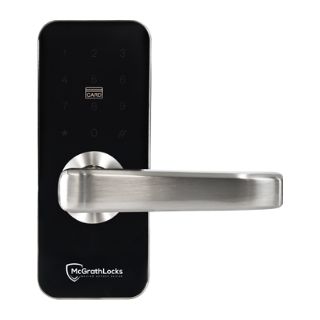
McGrath Smart Locks — Windsor Fire Rated Smart Lock
- Doors: Firecore and E-Core, -/120/30
- Lock body: Dormakaba MS2900/MS2902 mortice (up to 95 mm), MS2602 mortice (60 mm), McGrath tubular latch (60/70 mm) or Lockwood 530 tubular latch (60/70/127 mm)
- Evidence: Jensen Hughes 120207 DHAR1.0 (Firecore, to 31 Jan 2029); 119867 DHAR1.1 (E-Core, to 31 Oct 2029)
2. Häfele Genesis DL8800 Smart Lock
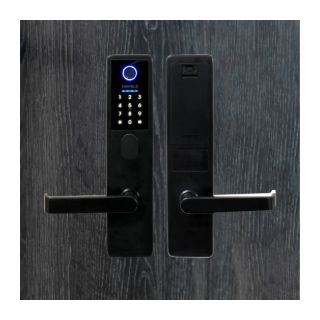
Häfele Australia — Genesis DL8800 digital door lock
- Doors: Firecore Mini and Maxi doors, AS 1530.4-2005 and -2014, 2 hours
- Lock body: Startec PML9991 mortice, 60 mm
- Evidence: Firecore Hardware List — FAS220084 DHAR2.0, to 31 Aug 2027
3. dormakaba M5 Digital Mortice Door Lock
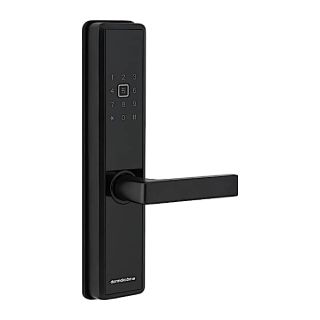
dormakaba Australia — M5 Digital Mortice Door Lock
- Doors: Firecore Mini and Maxi doors, AS 1530.4-2005 and -2014, 2 hours
- Lock body: Dormakaba MS2602 (MS2600 series) mortice, 60 mm (M5 and M6 digital mortice locksets)
- Evidence: Firecore Hardware List — FAS220087 DHAR1.0, to 31 Oct 2027
4. Gainsborough Freestyle Trilock (Urban Aurora)
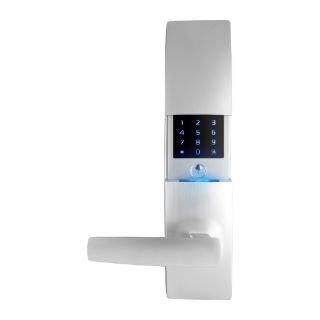
Gainsborough Hardware — Gainsborough Freestyle
- Doors: Firecore, AS 1530.4-2005 and -2014, -/120/30
- Lock body: Fire-rated latch set, double cylinder, 60 mm
- Evidence: Warringtonfire FAS220097 DHAR1.0, to 31 Jul 2027
5. Schlage Omnia Fire Rated Smart Lock
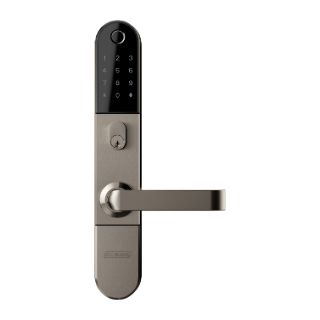
Allegion — Schlage Omnia Fire Rated Smart Lock
- Doors: Firecore, AS 1530.4-2005 and -2014, -/120/30
- Lock body: Legge 990MF mortice, 60 mm
- Evidence: FAS220097 DHAR1.0, to 31 Jul 2027
- Note: Only with the Legge 990MF mortice body.
6. Yale Unity Entrance Lock (Fire Rated)
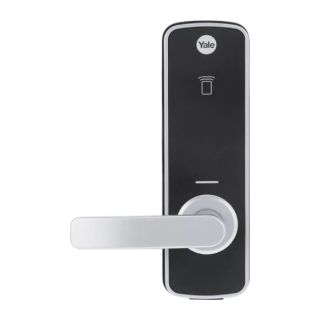
Yale Australia — Yale Unity Entrance Lock Fire Rated
- Doors: Firecore and E-Core, -/120/30
- Lock body: Firecore — cylindrical lockset, 60 or 70 mm. E-Core — tubular latch, 70 mm, with intumescent wrapped around the door sensor
- Evidence: Jensen Hughes FAS210391 DHAR9.0 (Firecore, to 31 May 2027); FAS220146 DHAR6.1 (E-Core, to 30 Sep 2027)
- Note: Specify the Fire Rated version. On E-Core doors the -/120/30 rating covers the lock fitted with the internal intumescent around the door sensor
7. SALTO XS4 One
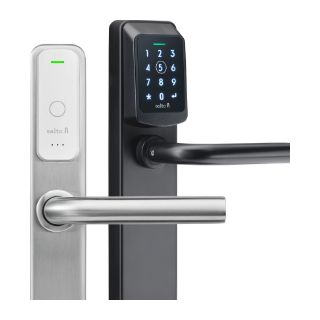
- Doors: Firecore Mini and Maxi doors, AS 1530.4-2005 and -2014, 2 hours
- Lock body: SALTO LE7S0560C42IM8 mortice with CE7S0CR6IM strike, 60 mm (XS4 One, XS4 One+ and XS4 Mini)
- Evidence: Firecore Hardware List — FAS230077 DHAR1.0, to 30 Jun 2028
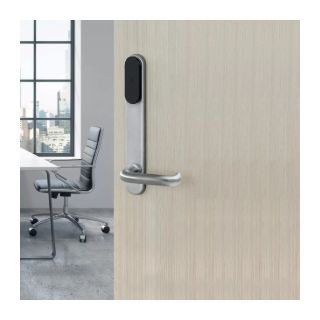
8. Lockwood SMARTair i-max
- Doors: Firecore and E-Core, -/120/30
- Lock body: Lockwood 3772NOHSS mortice, 60 mm (Firecore); 3772 MkII mortice, 60 mm (E-Core)
- Evidence: FAS210391 DHAR9.0 (to 31 May 2027); FAS220146 DHAR6.1 (to 30 Sep 2027); Firecore list FRT230134 DHAR1.0 (to 29 Nov 2028)
- Note: Suits buildings running a SMARTair access system.
9. Lockwood Aperio AU100 escutcheon
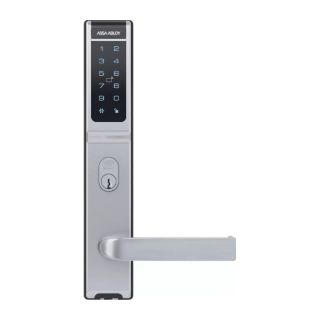
ASSA ABLOY — Aperio AU100 V3 Australian Escutcheon
- Doors: Firecore, -/120/30
- Lock body: Tubular latch, 60 or 127 mm (Aperio AU100 / CORTEX CTX series)
- Evidence: FAS210391 DHAR9.0, to 31 May 2027
- Note: Wireless link to building access control. The 127 mm option suits older cylindrical lock preparations.
10. Carbine CEL2 BT
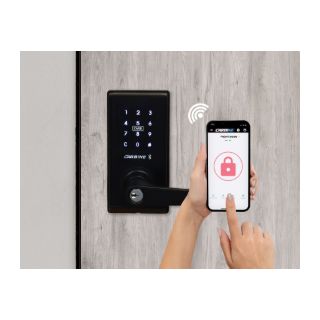
Carbine Digital Locks — CEL2 BT
- Doors: E-Core, -/120/30; Firecore (CEL2-3IN1-SL8SN variant), AS 1530.4-2014 doors only
- Lock body: Tubular latch, 70 mm (E-Core); 60 mm (Firecore)
- Evidence: Jensen Hughes FAS220275 DHAR1.6 (E-Core, to 30 Nov 2027); Firecore list FRT230184 DHAR2.0 (to 20 Dec 2028)